
I still remember the first time artificial intelligence genuinely surprised me. I was using a music app, half paying attention, when it recommended a song I had never heard before that somehow felt like it had been written specifically for me. I sat there thinking, how did it know? That was the moment AI stopped being a buzzword for me and started feeling like something real, something worth understanding. And if you are here reading this, I am guessing you feel the same way.
This article is going to walk you through everything you need to know about AI, where it came from, how it actually works, and why it matters more today than ever before.
Understanding Artificial Intelligence in Plain Language
Let us start with the basics because honestly, the term gets thrown around so much that its actual meaning gets lost in the noise.
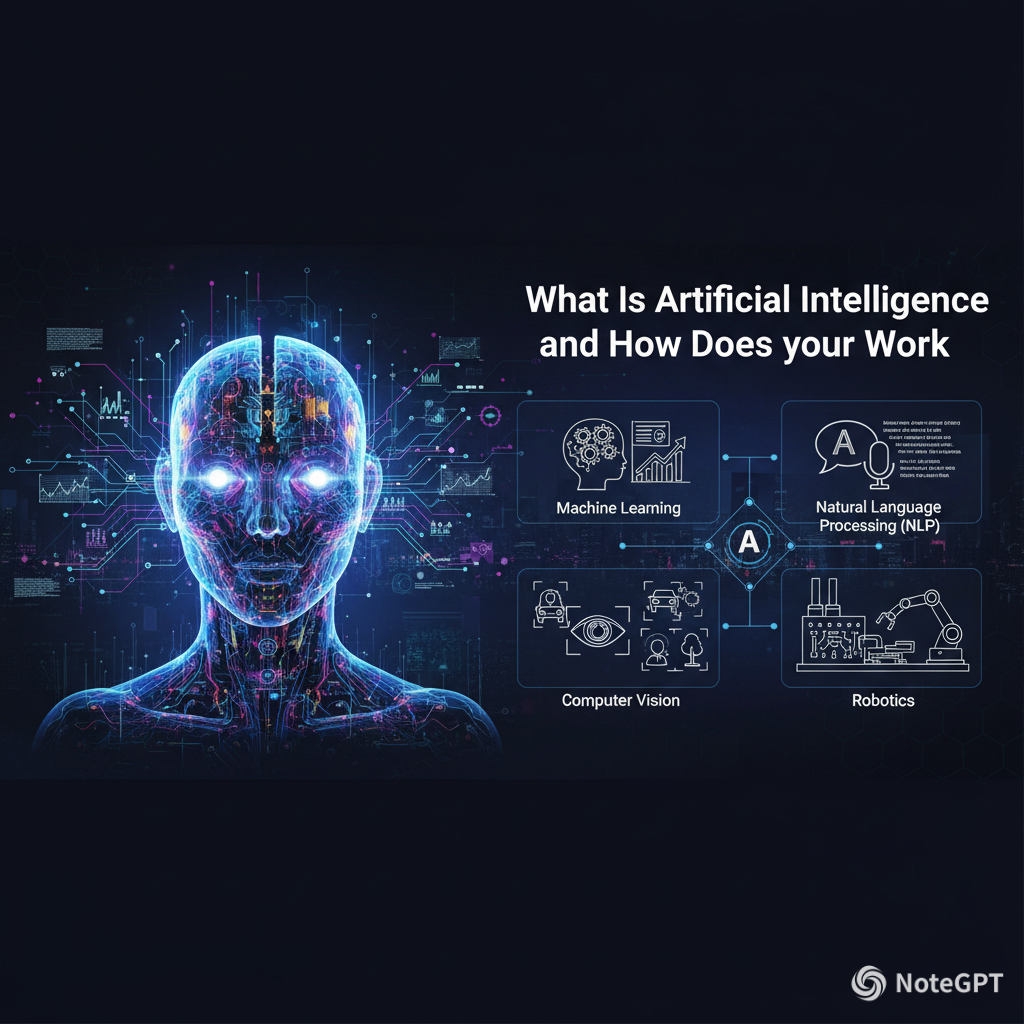
Artificial intelligence is essentially the ability of a computer or machine to perform tasks that would normally require human thinking. Things like recognizing faces, understanding spoken language, making decisions, and even creating art. It is not magic, even though it can feel that way sometimes. It is math, data, and incredibly clever programming working together behind the scenes.
Think of it like teaching a very fast, very Patient student. You show that student millions of examples of something, say pictures of cats, and eventually it learns to recognize a cat on its own. That learning process is what sits at the heart of machine learning algorithms, which are one of the core building blocks of modern AI.
How Machine Learning and Deep Learning Power Modern AI
Here is where things get a little more layered, but stay with me because this part is genuinely fascinating.
Machine learning is a subset of AI where systems learn from data rather than being explicitly programmed with rules. Instead of a programmer writing out every possible scenario, the machine figures things out on its own by analyzing patterns in massive datasets. It is a bit like learning to ride a bike. Nobody hands you a rulebook. You just fall, adjust, and eventually find your balance.
Deep learning models take this a step further. They use structures called neural network technology, loosely inspired by the way the human brain works. These networks process information in layers, with each layer learning something more complex than the last. This is the technology behind facial recognition, voice assistants, and self-driving cars.
I remember explaining deep learning to my younger cousin using a pizza analogy. The first layer notices the dough. The next notices the sauce. The next notices the toppings. By the end all those layers together can tell you exactly what kind of pizza you are looking at. He got it immediately. Sometimes the simplest analogies do the best job.
Real World Applications of Artificial Intelligence Today
This is the part that really blows people’s minds, because AI is not some distant future concept. It is already woven into the fabric of everyday life in ways most people do not even notice.
Computer vision systems power everything from the facial recognition on your phone to quality control cameras in factories that can spot a defect in a product faster than any human eye. Natural language processing is what allows your email to filter spam, your phone to understand voice commands, and chatbots to hold surprisingly coherent conversations.
Predictive analytics tools are being used in healthcare to identify patients at risk of developing serious conditions before symptoms even appear. In finance, AI powered software development is helping institutions detect fraudulent transactions in real time, flagging suspicious activity within milliseconds.
And then there is the creative side. AI is now generating images, writing assistance tools, composing music, and even helping architects design buildings. The boundaries of what machines can do are expanding almost faster than we can track.
Over at Tekvairo.com, there is a growing library of content that explores exactly how these technologies are being applied across different industries, explained in a way that does not require a computer science degree to follow along.
How Artificial Intelligence Is Changing the Job Market
Let us talk about the elephant in the room. A lot of people are worried that AI is coming for their jobs. And honestly, that concern is not unfounded. Automation and robotics powered by AI are already replacing certain repetitive, manual tasks in manufacturing, logistics, and data entry.
But here is the fuller picture. Every major technological shift in history has eliminated some jobs while creating entirely new ones that nobody could have predicted beforehand. The industrial revolution automated physical labor and created entirely new categories of work. The internet eliminated travel agents and video rental stores while creating social media managers, SEO specialists, and app developers.
AI is following the same pattern. Yes, some roles will shrink. But new roles centered around AI oversight, data science applications, ethical AI development, and human-AI collaboration are already emerging and growing rapidly. The smartest move anyone can make right now is not to fear AI but to understand it well enough to work alongside it.
Why Learning About AI Matters More Than Ever
I want to be real with you for a second. A few years ago I thought AI was something only engineers and tech companies needed to care about. I was wrong. The more I learned, the more I realized that understanding cognitive computing solutions and AI fundamentals is becoming a baseline skill, like knowing how to use a spreadsheet or send an email.
Whether you are a business owner trying to figure out how to use AI tools to save time, a student deciding what skills to develop for the future, or just a curious person trying to make sense of the world changing around you, getting familiar with artificial intelligence is one of the most valuable things you can do right now.
The good news is that you do not need to become a programmer or a data scientist to benefit from this knowledge. You just need a willingness to learn and reliable resources to guide you. That is exactly what Tekvairo.com is built around, making complex technology topics like AI accessible, practical, and genuinely useful for real people navigating a rapidly changing world.
The Future of Artificial Intelligence
Looking ahead, the trajectory of AI is both exciting and a little humbling. Researchers are working on systems that can reason more like humans, adapt to entirely new situations without being retrained, and collaborate with people in increasingly sophisticated ways.
The integration of AI into healthcare alone could save millions of lives through earlier diagnoses, personalized treatment plans, and drug discovery at a pace humans simply cannot match alone. In education, AI has the potential to create truly personalized learning experiences tailored to each student’s pace, strengths, and gaps.
There are also serious conversations happening right now about ethics, bias, privacy, and accountability in AI systems. These are not small concerns. They are the kinds of questions that will shape what kind of future we actually build with this technology. And they are conversations that benefit from as many informed voices as possible, not just engineers and executives, but everyday people who understand enough to participate meaningfully.
FAQ
What is the simplest way to explain artificial intelligence? Artificial intelligence is when a computer or machine is designed to perform tasks that typically require human thinking, such as understanding language, recognizing images, or making decisions based on data.
Is artificial intelligence the same as machine learning? No, though they are closely related. Machine learning is a subset of artificial intelligence. AI is the broader concept while machine learning is one of the main methods used to achieve it.
Can small businesses benefit from artificial intelligence? Absolutely. Small businesses are already using AI powered tools for customer service, marketing automation, inventory management, and financial forecasting without needing large tech teams to implement them.
Is artificial intelligence dangerous? Like any powerful tool, AI carries risks if used irresponsibly. Issues like bias in algorithms, data privacy concerns, and misuse are real challenges. However, with proper oversight and ethical guidelines, AI can be developed and used safely and beneficially.
How can I start learning about artificial intelligence as a beginner? Start with beginner friendly resources that explain core concepts without heavy technical jargon. Platforms like Tekvairo.com offer accessible content that breaks down AI topics in a way that makes sense for everyday readers looking to build their understanding step by step.









Leave a Reply