
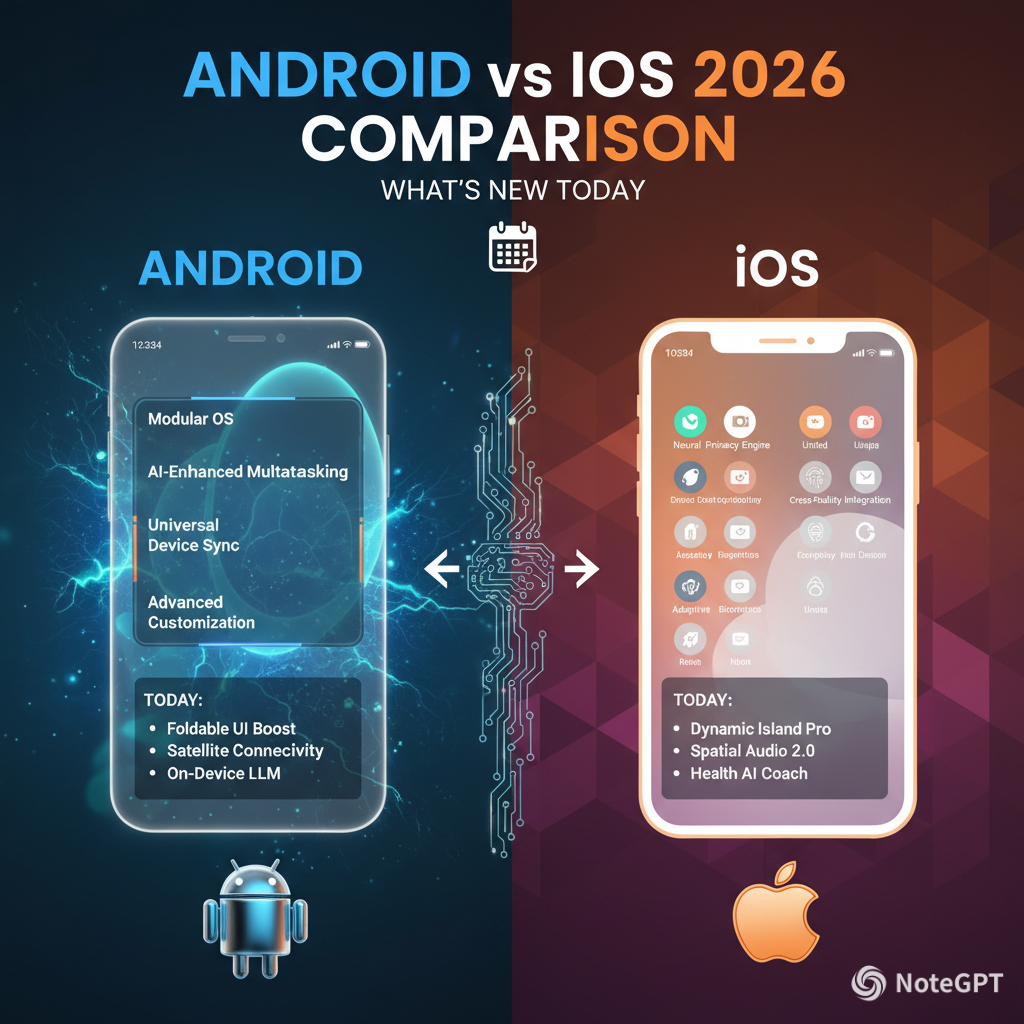
I have switched phones more times than I care to admit. Android to iPhone, iPhone back to Android, and somewhere in the middle a brief experiment with a device I would rather forget entirely. Every single time I made a switch, I thought I had finally figured out which side of the Android vs iOS 2026 comparison debate I belonged on. And every single time, something pulled me back into questioning that decision all over again. If you have ever stood in a phone store feeling genuinely paralyzed trying to choose between these two giants, this article is written specifically for you.
The truth is that both platforms have evolved dramatically, and 2026 has brought some genuinely significant changes to both sides of this conversation. Let us dig into all of it together.
What Makes the Android vs iOS 2026 Comparison So Interesting This Year
Every year people declare one platform the winner and every year the other one comes back stronger. That pattern has never been more true than it is right now.
Both Google and Apple have been under enormous pressure to innovate in ways that actually matter to everyday users rather than just chasing spec sheet numbers. The result is that 2026 has delivered some of the most meaningful smartphone software updates 2026 has seen in years, touching everything from how these systems handle artificial intelligence to how they manage battery life and security in the background without you ever having to think about it.
What makes this comparison particularly fascinating right now is that the gap between the two platforms has narrowed in some areas while widening dramatically in others. And knowing which areas matter most to your specific lifestyle is really the key to making the right choice.
Design and User Interface in 2026
Let me start with something that sounds shallow but actually matters more than most people admit. How a phone feels to use every single day shapes your entire relationship with it.
Apple has continued refining its approach to user interface design differences with iOS in 2026. The experience is clean, consistent, and deeply intentional. Every animation, every transition, every tap feels deliberate. If you have ever handed an iPhone to someone who has never used a smartphone before, you already know that the learning curve is almost nonexistent. Things are where you expect them to be. It just works.
Android in 2026 tells a more layered story. Google Android customization options have always been the platform’s signature strength, and that remains powerfully true this year. You can reshape your home screen, swap out default apps, sideload software, and genuinely make the phone feel like yours in a way that iOS simply does not allow. For some people that freedom is everything. For others it is an overwhelming rabbit hole they never asked to fall into.
I remember setting up a new Android phone for my dad a couple of years ago. Three hours later he called me because he had accidentally changed something in the settings and could not figure out how to get back to where he started. That experience tells you a lot about who each platform is really built for.
Performance and Battery Life Benchmarks
Here is where things get genuinely competitive in 2026.
Apple’s silicon continues to set an incredibly high bar for raw processing power. The latest iPhone chips are benchmarking at levels that most Android devices simply cannot match in pure computational speed. For tasks like video editing, gaming, and running demanding applications, the performance gap in Apple’s favor remains real.
But battery life and performance benchmarks tell a more complicated story when you zoom out. Several Android manufacturers have made extraordinary strides in battery efficiency this year. Some flagship Android devices are now comfortably outlasting iPhones in real world usage tests, particularly for users who spend a lot of time streaming, browsing, and using social media throughout the day.
The honest answer is that both platforms offer excellent performance in 2026, and unless you are doing something extremely demanding, the average user is unlikely to notice a meaningful difference in day to day speed.
Security and Privacy in 2026
This is the conversation that matters more than almost any other right now, and both platforms know it.
Apple has built its entire brand identity around privacy, and iOS 2026 continues to reinforce that positioning with some genuinely impressive mobile security and privacy settings. App tracking transparency, on device processing for sensitive data, and tightly controlled app review processes all contribute to an ecosystem that is remarkably difficult to compromise. If privacy is your top priority, Apple’s approach remains the gold standard.
Google has made serious investments in Android security over the past few years, and 2026 represents a genuine leap forward. Monthly security patches, improved sandboxing for apps, and new AI powered threat detection built directly into the operating system have significantly closed the gap that once made Android feel like the riskier choice. That said, the Android ecosystem’s openness, its greatest strength in terms of customization, also creates more surface area for potential vulnerabilities compared to Apple’s locked down approach.
Tekvairo.com has covered the evolution of mobile security extensively, and the consensus among tech analysts is that both platforms are now genuinely secure for the vast majority of users, provided you are keeping your software updated and practicing basic digital hygiene.
App Ecosystem and Cross Platform Compatibility
The old argument that iOS had better apps is largely obsolete in 2026. The quality gap between the Apple App Store and Google Play Store has narrowed to the point where most major applications are excellent on both platforms.
Where differences still exist is in exclusivity and timing. Some developers continue to launch on iOS first before bringing apps to Android, though this gap has shrunk considerably. Cross platform app compatibility has also improved dramatically, making it easier than ever to use the same services and tools regardless of which phone you carry.
Wearable device integration support is one area where your choice of phone ecosystem can still genuinely limit you. If you own an Apple Watch, you need an iPhone. Full stop. Apple’s wearable ecosystem is deeply integrated and works beautifully within itself but is completely closed off to Android users. Google’s wearable ecosystem with Wear OS has improved significantly in 2026 but still does not match the seamlessness of the Apple Watch and iPhone pairing.
Which Mobile OS Gets Faster Software Updates
This one is straightforward and has been for years. Apple wins this category decisively.
When Apple releases a new version of iOS, it reaches hundreds of millions of devices almost simultaneously. Support for older devices is also generous, with iPhones from several years ago still receiving the latest updates.
Android’s update situation is more complicated because of fragmentation. Google’s own Pixel devices get updates quickly and directly. But if you are using a Samsung, OnePlus, or any other Android manufacturer’s device, updates go through an additional layer of customization before they reach you, which can mean weeks or even months of delay. Some budget Android devices may never receive major OS updates at all.
For users who care about always having the latest features and security patches the moment they are available, iOS has a structural advantage that Android has not yet fully solved despite significant progress in 2026.
Making the Right Choice for Your Life
Here is the thing I have learned after all those phone switches. There is no objectively correct answer in the Android vs iOS debate. There is only the right answer for you specifically.
If you are already deep in the Apple ecosystem, using a Mac, an iPad, AirPods, and an Apple Watch, switching to Android would cost you convenience and integration that is genuinely hard to replace. The Apple iPhone ecosystem advantages are real and they compound the more Apple products you own.
If you love tinkering, want more control over your device, prefer a wider range of hardware options at different price points, or simply do not want to be locked into one company’s vision of how your phone should work, Android in 2026 offers a compelling, mature, and genuinely excellent experience.
Tekvairo.com is a great place to keep exploring these kinds of technology decisions with clear, unbiased breakdowns that help you cut through the marketing noise and figure out what actually matters for your real life needs.
FAQ
Which is better Android or iOS in 2026 for everyday users? Both platforms are excellent for everyday use in 2026. iOS offers a smoother more consistent experience while Android provides greater flexibility and customization. The better choice depends entirely on your personal preferences and existing device ecosystem.
Is Android more secure than iOS in 2026? iOS still holds a slight edge in overall security due to its closed ecosystem and strict app review process. However Android has made significant security improvements in 2026 and is now considered very secure for most users when kept up to date.
Should I switch from Android to iPhone in 2026? If you value seamless ecosystem integration, faster software updates, and a consistent user experience, switching to iPhone makes sense. If you prefer customization and hardware variety, staying with Android is equally valid.
What new features did iOS get in 2026? iOS 2026 brought enhanced AI powered features, improved privacy controls, smarter notification management, and deeper wearable device integration among other updates that refined the overall user experience meaningfully.
Which mobile OS gets faster software updates Android or iOS? iOS consistently delivers faster and broader software updates across all supported devices simultaneously. Android updates vary significantly depending on the manufacturer and device model you are using.





Leave a Reply