
Please wait…
You are being securely transferred to our partner site.
seconds remaining
If you are not redirected automatically, click here to proceed.
Most people think sweepstakes are pure luck. You enter, hope for the best, and maybe—just maybe—win something.
But if you look closely at people who win repeatedly, you’ll notice something important:
👉 They don’t rely on luck. They rely on structure.
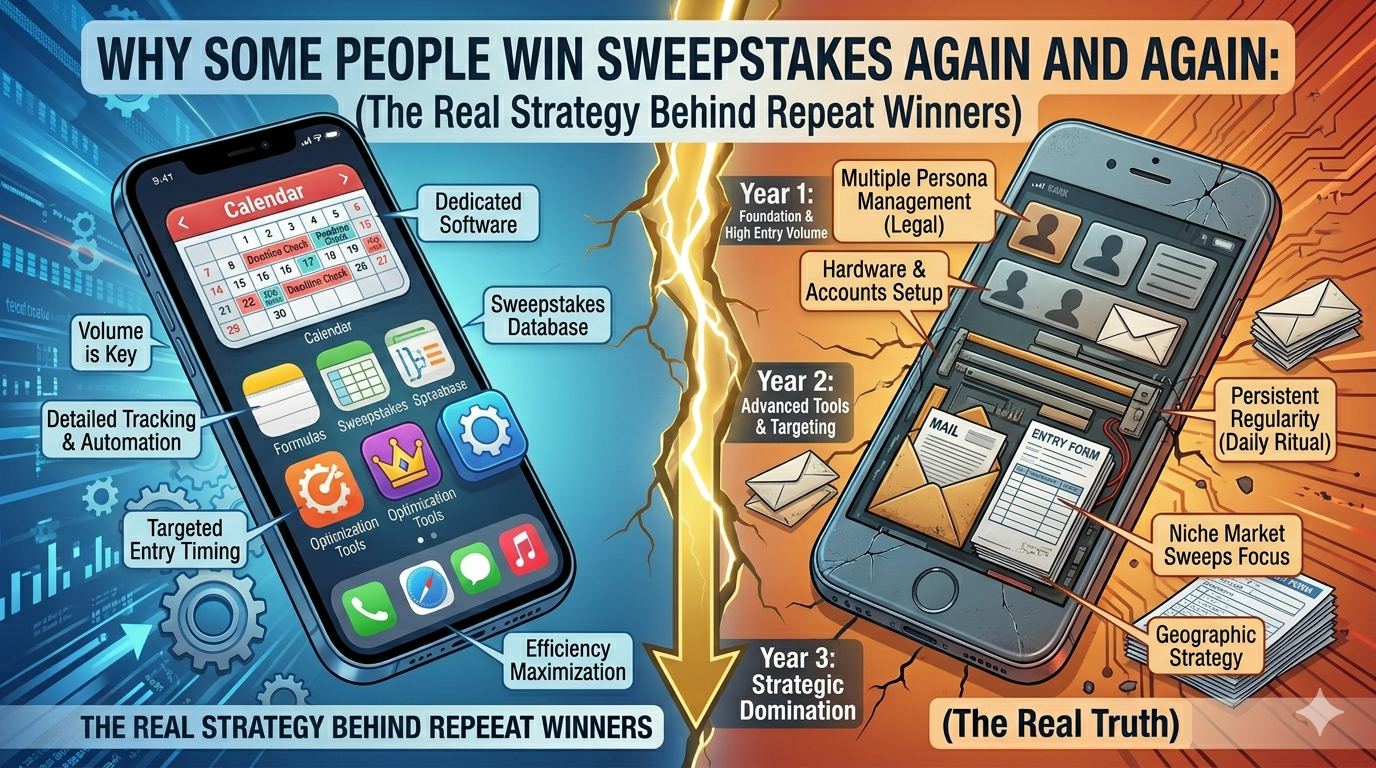
Sweepstakes success is not random. It follows patterns, systems, and consistent behavior. Once you understand this structure, your chances of winning improve significantly—not because the odds change, but because your approach changes.
In this blog, we’ll break down how sweepstakes actually work, why structure beats luck, and how you can build your own winning system.
What Does “Structured Sweepstakes Strategy” Mean?
A structured approach means:
- You don’t enter randomly
- You don’t rely on motivation
- You follow a repeatable system
Instead of thinking:
“I hope I win something today”
You think:
“I will complete my daily entry system today”
This shift in mindset is what separates casual participants from consistent winners.
Why Most People Fail (They Rely on Randomness)
Most beginners make three critical mistakes:
1. They enter occasionally
They enter 5–10 sweepstakes and stop.
👉 Problem: Too few entries = too low probability
2. They chase only big prizes
Everyone goes after:
- iPhones
- Cash jackpots
- Travel giveaways
These have millions of entries.
👉 Result: Extremely low chance of winning
3. They have no tracking system
They forget:
- What they entered
- When contests end
- Where results are announced
👉 This leads to missed wins
The Structured System Used by Smart Sweepstakes Players
Now let’s break down how structured players actually operate.
1. Daily Entry Routine
Successful participants don’t “feel like entering”—they follow a routine.
Example system:
- 20–50 sweepstakes per day
- Fixed entry time (e.g., evening or morning)
- No skipping days
👉 Consistency increases total chances over time.
2. Categorized Sweepstakes Selection
Instead of randomly choosing contests, they categorize:
- High-value contests (low frequency)
- Medium competitions (balanced odds)
- Low-competition giveaways (high success rate)
👉 Smart players focus more on smaller contests for frequent wins.
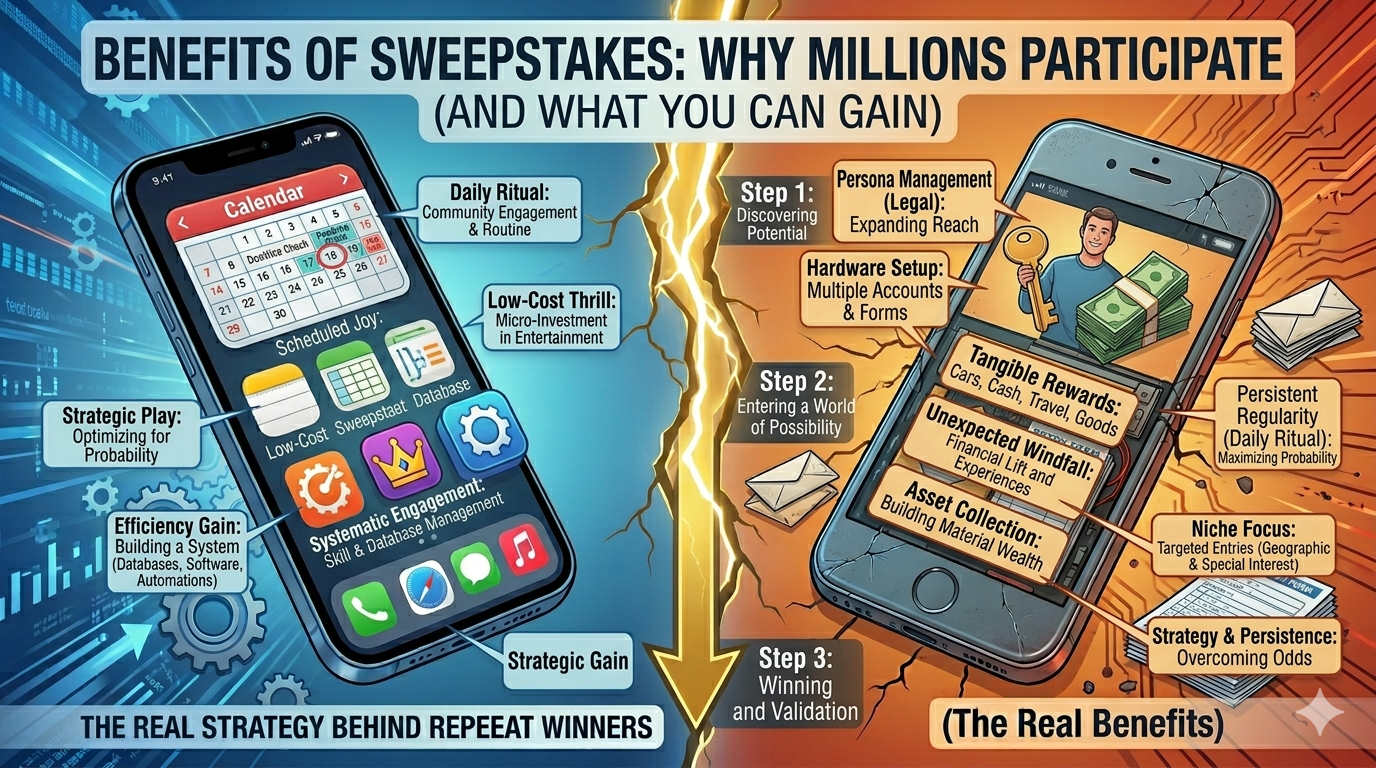
3. Tracking System (Very Important)
They use tools like:
- Google Sheets
They track:
- Entry date
- Contest name
- Deadline
- Entry method
👉 This prevents confusion and ensures nothing is missed.
4. Dedicated Email System
They avoid mixing personal and sweepstakes emails.
Using services like:
- Gmail
They:
- Filter sweepstakes emails
- Track winner announcements
- Avoid missing important notifications
👉 Organization leads to fewer missed wins.
5. Using Trusted Sweepstakes Sources
Instead of random searching, structured users rely on platforms like:
- Sweepstakes Advantage
- Online-Sweepstakes.com
👉 These sites update opportunities regularly and reduce scam risk.
6. Entry Optimization Strategy
Not all entries are equal.
Smart players:
- Complete bonus entries
- Refer friends when possible
- Follow all required steps carefully
👉 More actions = more chances per contest
7. Focus on Probability, Not Emotion
Structured players think logically:
Instead of:
“This prize is big, I should enter”
They think:
“How many people are entering this contest?”
👉 Smaller audience = higher chance of winning
8. Long-Term Consistency
This is the most important factor.
Most people quit after a few days.
Structured players:
- Stay active for weeks or months
- Accept that wins are spread out
- Understand probability improves over time
👉 Sweepstakes is a long game, not instant success.
The Mathematics Behind Structure (Simple Explanation)
Let’s simplify it:
If:
- 1 entry = low chance
- 100 entries = better chance
- 1000 entries = significantly better chance
👉 The system is cumulative.
It’s not about winning one contest—it’s about participating in many structured opportunities.
Why Structure Beats Luck Every Time
Luck is:
- Unpredictable
- Inconsistent
- Uncontrollable
Structure is:
- Repeatable
- Scalable
- Controllable
👉 That’s why structured players win more often over time.
They don’t “hope” to win—they engineer more chances to win.
Common Mistakes Even Structured Beginners Make
Even with a system, people fail when they:
- Overcomplicate their process
- Stop tracking properly
- Ignore small contests
- Give up too early
- Don’t follow rules carefully
👉 Structure only works when it is consistent.
How to Build Your Own Sweepstakes System
Here’s a simple starter plan:
Daily:
- Enter 20–30 sweepstakes
- Focus on small and medium contests
- Use autofill tools for speed
Weekly:
- Review your spreadsheet
- Check missed opportunities
- Adjust strategy
Monthly:
- Evaluate results
- Continue consistency
- Remove low-quality sources
Key Takeaways
- Sweepstakes success is not random—it is structured
- Consistency matters more than luck
- Tracking and organization improve results
- Smaller contests often give better chances
- Long-term participation is the real key








Leave a Reply