
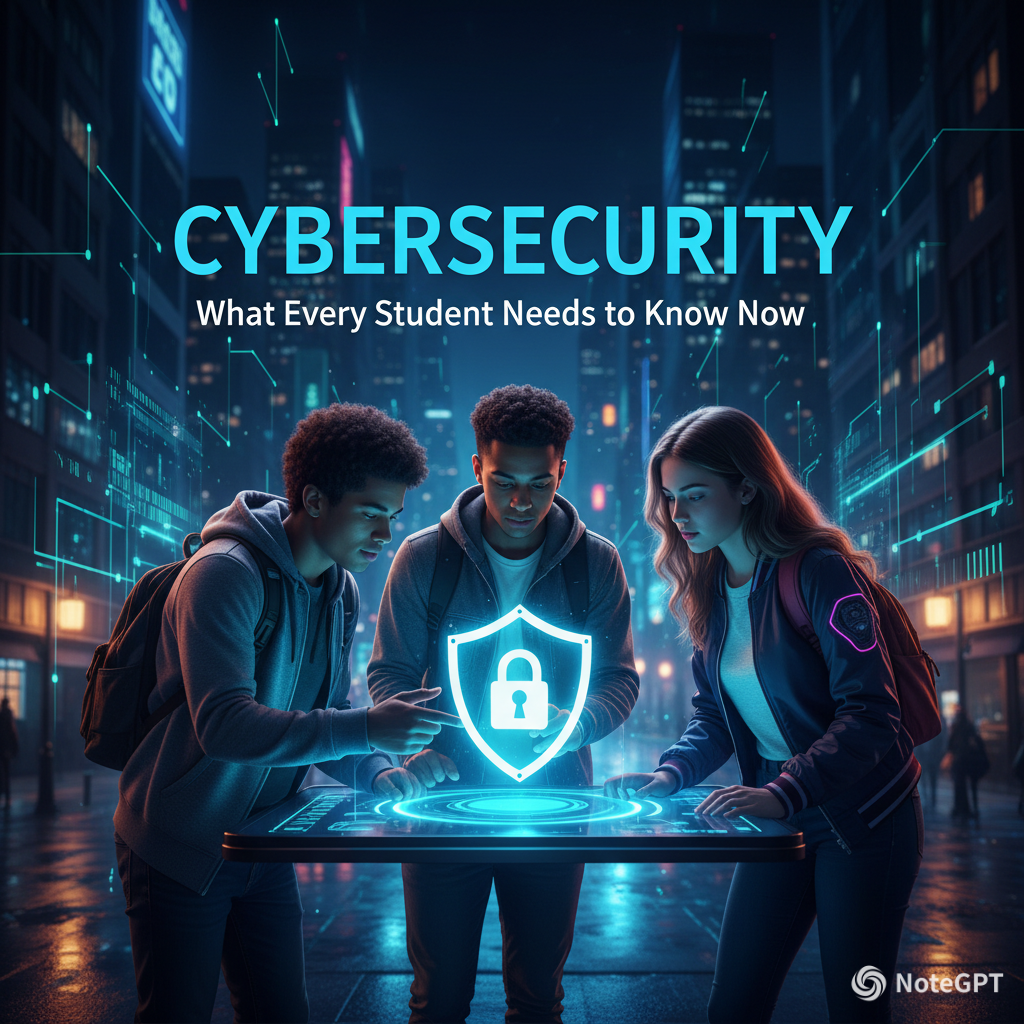
There is a moment most people remember when the internet suddenly felt less safe. For me it was the day a close friend lost access to his entire Gmail account, years of emails, documents, and contacts, gone overnight because he clicked one suspicious link. That was my first real introduction to cybersecurity and honestly it scared me into paying attention. If you are a student navigating the internet every single day for studying, freelancing, or building a business, understanding the basics of staying safe online is no longer optional. It is essential.
The digital world is full of opportunity but it is also full of risk. And the scary part is that most attacks do not target big corporations first. They target everyday people who are not paying attention.
What Cybersecurity Actually Means
A lot of students hear the word cybersecurity and immediately picture a hacker in a dark room typing furiously on a keyboard. That image is mostly a myth. In reality cybersecurity is simply the practice of protecting your devices, networks, data, and online identity from unauthorized access or damage.
Think of it like locking the door to your house. You do not lock your door because you are paranoid. You lock it because leaving it open is an unnecessary risk. Cybersecurity works the same way. It is not about fear. It is about being smart and intentional about how you move through the digital world.
At its core cybersecurity covers everything from the password you choose for your email account to the way a large company protects millions of customer records. The scale changes but the principle stays the same. Protect what matters before someone else gets to it first.
Why Students Are a Prime Target for Cyber Attacks
Here is something most people do not realize. Students are actually among the most targeted groups online. Not because hackers have something personal against you but because students tend to use multiple platforms, connect to public WiFi regularly, reuse passwords across accounts, and often lack the awareness that more experienced internet users have built over time.
I went through a phase in university where I used the same password for everything. My email, my social media, my university portal, even my online banking. It felt convenient. It was also a disaster waiting to happen. The moment one of those platforms gets breached, every single account connected to that password becomes vulnerable. That is exactly how identity theft prevention becomes so critical for young people.
Add to that the fact that students are constantly downloading resources, clicking links shared in group chats, and accessing accounts from shared computers in libraries or cafes. Every one of those behaviors creates an opening for cyber threats for beginners to slip through.
The Most Common Cyber Threats You Need to Know About
Understanding what you are up against is half the battle. There are a few types of attacks that show up again and again especially for students and young professionals.
Phishing attacks and scams are the most common by far. These are fake emails, messages, or websites designed to trick you into giving away your login credentials or personal information. They look incredibly convincing. A phishing email might appear to come from your university, your bank, or even a friend. The goal is always the same: get you to click something you should not.
Malware and ransomware protection is another area every student should understand. Malware is malicious software that gets onto your device through downloads, attachments, or infected websites. Once it is there it can spy on your activity, steal your data, or even lock you out of your own files until you pay a ransom. Yes that last one is real and it happens to individuals not just big companies.
Then there is the issue of weak passwords. It sounds basic but poor password security best practices are behind a staggering number of account breaches every single year. Using your name, birthdate, or the word “password” as your actual password is essentially leaving your front door wide open.
How to Build Good Digital Safety Habits Starting Today
The good news is that protecting yourself does not require a degree in computer science. It requires consistency and a few smart habits practiced regularly.
Start with your passwords. Use a different password for every important account and make each one a mix of letters, numbers, and symbols. If remembering them all sounds impossible, a password manager app can store them securely for you. That single change alone dramatically reduces your risk.
Enable two factor authentication on every account that offers it. This means that even if someone gets your password, they still cannot log in without a second verification step, usually a code sent to your phone. It takes ten extra seconds to log in and it makes your account exponentially harder to breach.
Be careful about what networks you connect to. Public WiFi at a coffee shop or university library is convenient but it is also unencrypted in many cases, meaning anyone on the same network could potentially see your activity. If you regularly use public networks, consider using a VPN which creates a secure tunnel for your data.
At Tekvairo we always tell our readers that secure browsing habits are not complicated to build. They just need to become routine the same way brushing your teeth is routine. Small consistent actions add up to serious protection over time.
Cybersecurity as a Career Path for Students
Beyond personal safety, cybersecurity is one of the fastest growing and highest paying fields in the entire tech industry right now. The global demand for skilled professionals in information security management is massive and it is only going up as more of our lives move online.
The best part for students is that you do not necessarily need a traditional four year degree to break into this field. There are excellent online certifications that are recognized by employers worldwide. Ethical hacking and penetration testing is one of the most exciting and well compensated specializations within the field. Companies actually pay skilled professionals to try to break into their systems so they can find and fix weaknesses before real attackers do.
Vulnerability assessment and risk management is another growing area where businesses need people who can identify weaknesses in their systems and develop strategies to address them. If you enjoy problem solving, thinking like an attacker, and staying one step ahead, this career path might be exactly right for you.
The cybersecurity frameworks and standards that govern how organizations protect their data are also worth understanding even if you never work directly in security. As a future founder or business owner, knowing how data breach prevention works and what compliance standards your business needs to meet will save you from serious legal and financial headaches down the road.
Why This Knowledge Matters Even If You Never Work in Tech
Even if your career goals have nothing to do with technology, cybersecurity literacy is becoming a basic life skill. We bank online, store medical records digitally, run businesses through apps, and share enormous amounts of personal information across platforms every single day.
Endpoint security solutions are no longer just a concern for IT departments. They are relevant to anyone who owns a smartphone or laptop. Understanding the basics means you can protect your own data, recognize when something feels off, and make smarter decisions about what information you share and where you share it.
The analogy I always use is this. You do not need to be a mechanic to drive a car safely. But you do need to know what the warning lights mean, how to check your tire pressure, and when to take it in for a checkup. Cybersecurity knowledge works exactly the same way. You do not need to be an expert. You just need enough awareness to stay out of trouble.
FAQ
What is cybersecurity in simple terms for a student? Cybersecurity is the practice of protecting your devices, accounts, and personal data from being accessed, stolen, or damaged by unauthorized people online.
Why are students specifically targeted by hackers? Students often reuse passwords, use public WiFi frequently, and download files from unverified sources, all of which create easy opportunities for attackers to exploit.
How can I start learning cybersecurity for free as a beginner? Platforms like Google, Coursera, and Cybrary offer free beginner level courses. Starting with basic networking and security concepts is the best first step.
Is cybersecurity a good career choice for students in Pakistan? Absolutely. The demand for cybersecurity professionals is growing rapidly both locally and globally and many entry level roles are accessible through certifications alone.
What is the single most important thing I can do right now to improve my online security? Enable two factor authentication on all your important accounts. It is free, takes minutes to set up, and immediately makes your accounts significantly harder to compromise.







Leave a Reply